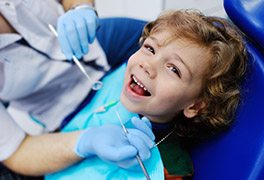


Baby Oral Health
As a parent, you know that your baby's health is the most important priority. By showing children at a very young age the importance of taking care of their teeth and gums every day, parents will be providing them with a lifetime of healthy smiles.
The Massachusetts Dental Society has joined forces with the Massachusetts Medical Society to advocate for a renewed focus by medical and dental providers on cavity prevention by following best practices in oral health care for children. See the Joint Statement.
Teething
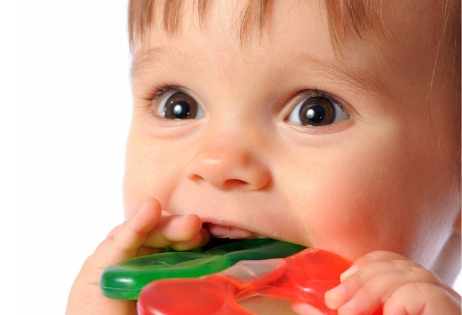
Teething normally occurs between the ages of four months and two-and-a-half years, causing sore and tender gums. Common signs of teething include irritability, loss of appetite, restlessness, excessive drooling, and waking up during the night. Parents can ease their baby’s discomfort by gently rubbing gums with a clean finger; a small, soft-bristled toothbrush; or wet gauze. A clean, cold teething ring to chew on may also be helpful. If your baby continues to be uncomfortable even after you attempt to ease his or her teething pain, call your dentist or physician.
Thumbsucking and Pacifier Use
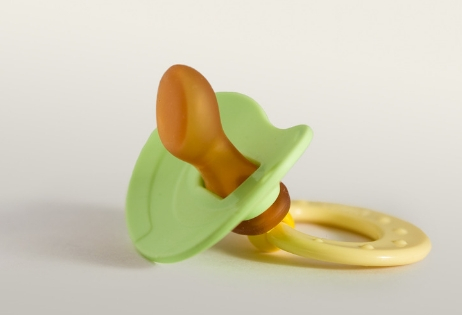
Thumbsucking and using a pacifier is a normal, soothing reflex for babies and young children. Most children stop sucking on thumbs and pacifiers between the ages of two and four, and typically no harm is done to their teeth or jaws. However, some children who repeatedly suck on a finger or pacifier for long periods of time may push their upper front teeth toward their lip or their front teeth may not come in properly. Positive measures, such as praise or small rewards, should be given to encourage children to stop. Negative reinforcement or constant nagging can actually have the opposite effect and may push children to suck their thumb or use a pacifier even more.
Baby Bottle Tooth Decay
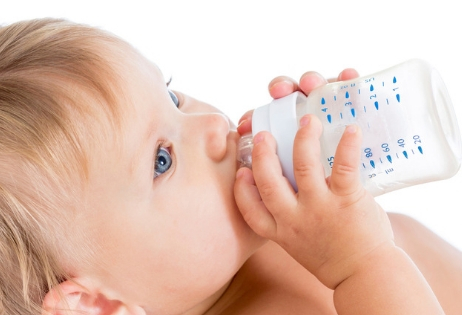
Baby bottle tooth decay is a dental condition that occurs when a child’s teeth are overexposed to sugary liquids such as breast milk, formula, fruit juice, and milk. And it’s not just what your child drinks, but also how often and how long his or her teeth are exposed. Parents who repeatedly offer their baby a bottle containing sugary liquids, either as a pacifier or at bedtime, can do serious harm to their child’s oral health. Instead, give your baby a bottle of water in between regular feedings.
Brushing and Flossing
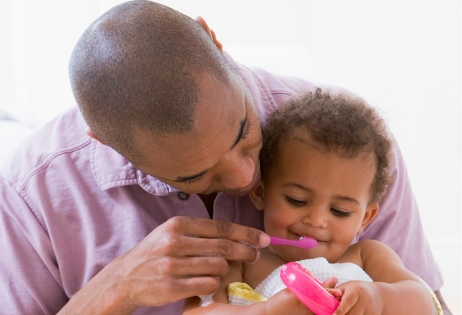
It’s important to begin oral health care as soon as your baby is born by cleaning his or her gums with a clean gauze pad or washcloth after each feeding. For children younger than three years, parents should brush their baby’s teeth gently with a smear of fluoride toothpaste (the size of a grain of rice). For children three to six years old, use a pea-size amount of fluoride toothpaste. Your child’s teeth should be brushed twice a day (morning and night) or as directed by a dentist. Flossing should begin as soon as any two teeth touch. Assist your child until he or she can brush and floss on their own—usually by age six or seven.
First Dental Visits